
A regular vest only holds on to the heat your body already makes — on a cold, windy morning, that’s rarely enough. A heated vest adds its own warmth right where you need it most, across your chest and back, and it layers easily under a coat or over a sweater. But the category is full of big claims: runtimes that don’t hold up, heat zones that sound impressive but cost more, and extras you have to buy separately.
We compared heated vests from Osmo, ORORO, Gerbing, and Gobi Heat on heat coverage, real-world battery life, weather protection, and value, to find the ones worth wearing all winter:
Heating Performance & Warm-Up
We looked at where each vest places its heating elements, how many heat settings it offers, and how quickly it starts to warm up. Heat across the chest and back — your core — does the most to keep your whole body warm.
Battery Life & Power Included
We compared the runtime each brand states for every heat setting, what owners report in practice, and exactly what comes in the box — battery, cable, and charger.
Weather Protection & Comfort
We reviewed each vest’s wind and water resistance, weight and fit, how easily it layers under a coat, and whether it can go in the washing machine.
Value for Money
We weighed each vest’s price against what it delivers out of the box — battery, sizes, warranty, and support — so you know what you’re really paying for.
The rankings on this page were produced by TT-Marketing Ltd, an outside firm that earns no commission from sales and holds no ownership interest in any product listed.
All models were scored using the same pre-set formula based on product specifications, verified customer review data, and seller return policies collected from Amazon US on July 28, 2026. The criteria and their weights were finalized before any product was scored, and the results can be independently recalculated using the substantiation report.
TT-Marketing also evaluated products hands-on. These observations inform the written reviews but do not affect the numerical rankings. Statements marked [tested] are based on hands-on testing. Figures marked with an asterisk (*) are manufacturer- or seller-provided claims that have not been independently verified.
After 4 weeks of reviewing, here are the Top 5 Best Heated Vests for 2026.


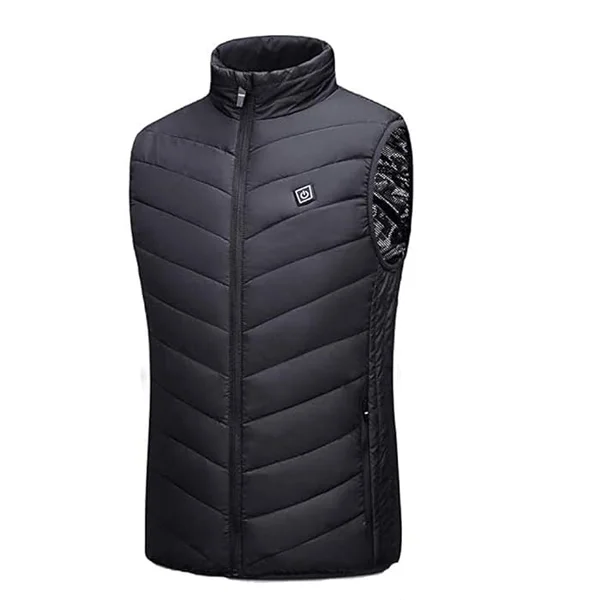

The Osmo Heated Vest is the easiest recommendation in this review — perfect for staying warm outdoors during cold weather, winter activities, and chilly daily commutes.
It puts the heat where it does the most good. Heating zones across the chest and back warm your core, the part of your body that keeps everything else warm, and the vest heats up within seconds of switching it on — no waiting around in the cold for it to kick in.
Three heat levels let you match the weather. The included rechargeable battery gives you up to 10 hours of warmth on the lowest setting and around 4–6 hours on the highest — enough for a full day outdoors.
It’s built for real winter days, too. The windproof, water-resistant fabric handles wind and light rain, while the lightweight, slim design moves with you — so it works just as well under a coat on the way to work as it does on its own for a hike, a game, or weekend errands. When it’s time to clean it, take out the battery and it goes straight in the washing machine on a gentle cycle.
The vest comes in sizes S to 3XL, with the battery and power cable included in the box.
Backed by free shipping and easy returns, the Osmo Heated Vest gives you more warmth for your money than anything else we reviewed.
VISIT SITE

The Osmo Heated Vest earns the top spot by getting the essentials right: fast-warming heat across the chest and back, three heat levels, up to 10 hours of warmth on low, and a windproof, water-resistant design that’s light enough to wear all day — at a price well below every other vest in this review. With free shipping and easy returns, it’s an easy way to stop dreading cold mornings. Whether you’re outdoors in cold weather, out for a winter activity, or on a chilly daily commute, it’s the heated vest we’d reach for first.
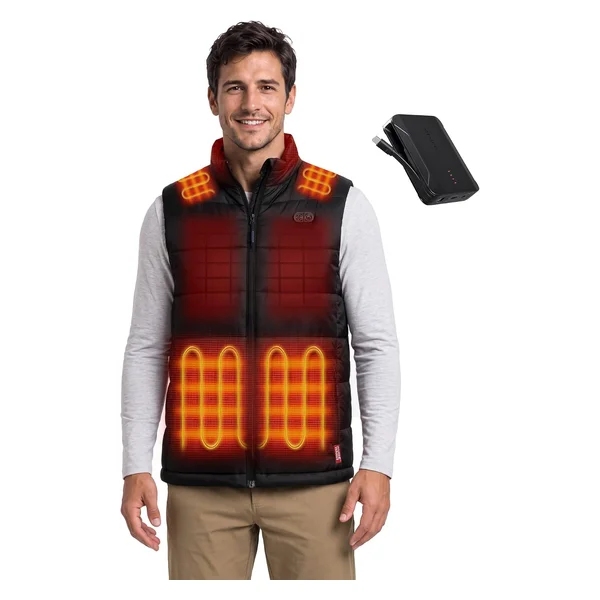

The ORORO Dual Control 7-Zone is the premium pick in this lineup, built around a bigger battery. Seven heating zones cover the shoulders, collar, mid-back, and hand pockets, and a dual-control system lets you run the core and pocket heat separately to save power. The 7.27V, 6,800mAh (49.4Wh) battery is the largest here, and the insulated puffer shell is water- and wind-resistant. It comes in sizes S to 3XL and is machine washable.
The drawbacks start with the price: at $279.99, it’s the most expensive vest we reviewed — $130 more than our top pick. The headline 13 hours is on the low setting; with all seven zones on high, ORORO rates it at about 3.5 hours. It’s also brand new — first listed in October 2026 — so there are no owner reviews yet to show how it holds up over a winter, and the listing doesn’t publish heat temperatures or warranty terms.
If maximum runtime matters most and budget isn’t a concern, it’s a capable vest. But you pay a lot extra for that battery, without a track record behind it.
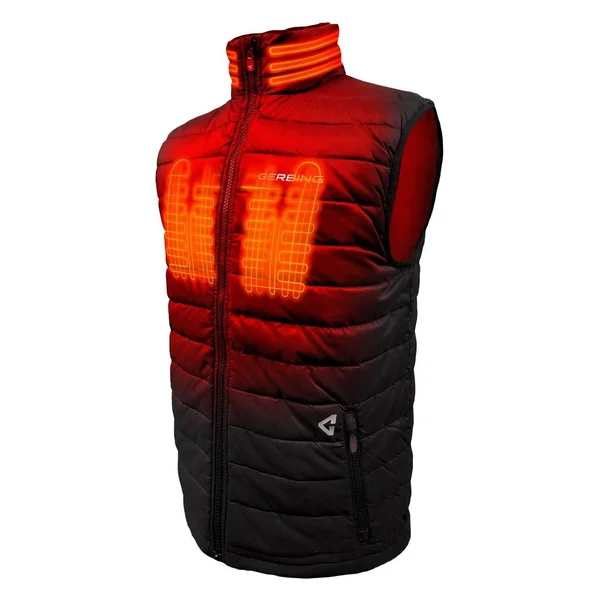

The Gerbing Khione 2.0 is a well-insulated puffer from a long-established heated-apparel brand. Four Microwire heating zones sit across the chest, back, and neck, reaching up to 135°F on the highest of four settings. The shell is ripstop fabric over 200-fill synthetic insulation, so it holds heat even with the power off, and it repels wind and water. A wall charger is included, and the heating elements carry a lifetime warranty.
The trade-off is battery size. Its 3,400mAh battery is the smallest in this lineup, rated at just 2 hours on full heat and 8 hours at the lowest 25% setting. The battery and charger are covered for only 90 days, and sizes stop at XXL — Amazon lists S to XL. Fit is worth checking, too: one owner says it runs big and long.
It’s a warm, well-built layer for shorter outings. For a full day outdoors, the vests above it go longer on a charge.
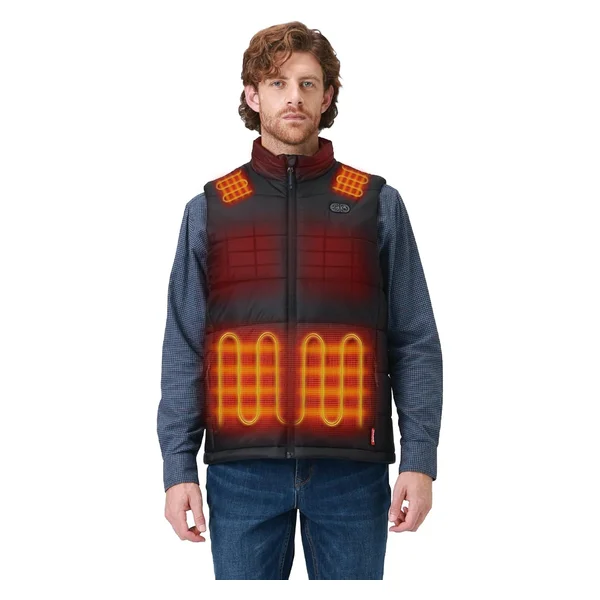

The ORORO Heated Puffer Vest is the more affordable 7-zone option from ORORO. Its heating zones cover the shoulders, neck, mid-back, and hand pockets, and the dual-control system lets you heat the upper body and pockets separately. It runs on a 7.4V, 4,970mAh battery that recharges over USB-C, the lightweight puffer uses FELLEX insulation, and it’s machine washable in sizes S to 3XL.
Runtime depends heavily on how you use it. ORORO rates it at up to 9 hours with all zones on — the 20-hour figure is for pocket heat only — and owner reviews are mixed on battery life, with some saying it lasts only 3–4 hours. Owner reviews are mixed on fit, too, with some calling it oddly sized. There’s no wall adapter in the box, and fast charging needs a 20W+ adapter you supply yourself.
It’s a solid everyday vest, but the mixed battery and fit feedback keep it behind the vests ranked above it.
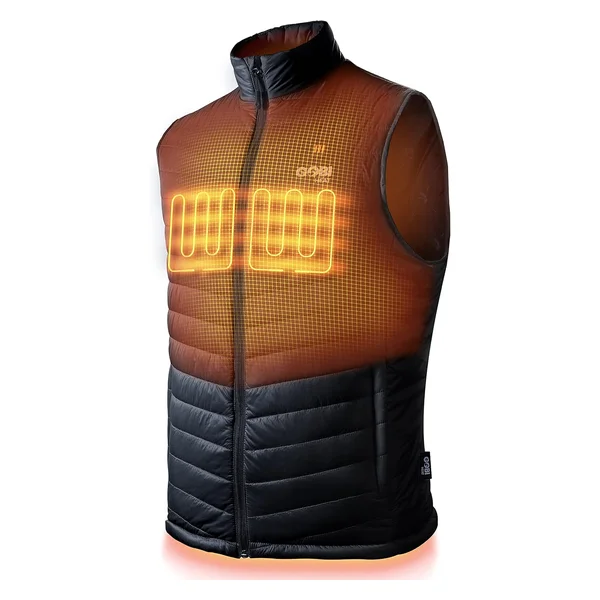

The Gobi Heat Dune is a simple, no-frills heated vest. It has three heat zones across the chest and back and three heat settings — 113°F, 131°F, and 140°F — plus a handy pre-heat mode that starts on high before settling to medium. Gobi rates its 5,000mAh battery at up to 10 hours on low, 8 on medium, and 5 on high. The lightweight nylon shell is wind- and water-resistant, it comes in a wide S–4XL size range, and it goes in the washing machine once the battery is out.
Battery life is where the Dune raises questions — some owners say the battery runs down faster than claimed. There’s no collar heat, and the slim shell has no insulation layer, so it relies on the heating elements and whatever you wear underneath. Owner reviews are mixed on sizing, and the warranty is just 1 year.
It’s a simple, lightweight layer, but the battery doubts and lack of insulation keep it behind the vests ranked above it.
A heated vest is a sleeveless vest with thin heating elements sewn into the lining over the chest and back, and sometimes the collar or hand pockets. A rechargeable battery pack sits in an inside pocket and powers those elements, and a button on the chest switches between heat settings, typically low, medium and high. Because a vest has no sleeves, it keeps the heat focused on your core while leaving your arms free, which makes it easy to wear on its own or layer under a coat. Runtime depends on the setting and the battery: low lasts longest, high drains fastest. Most heated vests can be machine washed once the battery is taken out.